



Why Silent Emergencies Are the Most Dangerous
Undetected Health Events That Occur Without Alarms
Silent emergencies are among the most dangerous situations in care environments because they unfold without obvious warning. An individual may experience a gradual loss of strength, confusion, or physical distress without triggering an alarm or asking for help. These undetected health events often appear ordinary at first, making them easy to overlook.
Unlike sudden accidents, silent emergencies develop quietly. A person may sit or lie in an unusual position for an extended time, move far less than normal, or stop following daily routines. Without active monitoring, these moments pass unnoticed until serious harm has already occurred.
Why Traditional Emergency Systems Fail in Silent Scenarios
Most traditional emergency systems depend on action. A button must be pressed. A voice command must be spoken. A fall must be clearly detected as a single event. In silent scenarios, none of these conditions are guaranteed.
During illness, confusion, sleep, or immobility, individuals may be unable to activate an alarm. As a result, the system fails not because it is broken, but because real life does not match its assumptions. This is where silent emergency detection becomes essential.
What Is Silent Emergency Detection
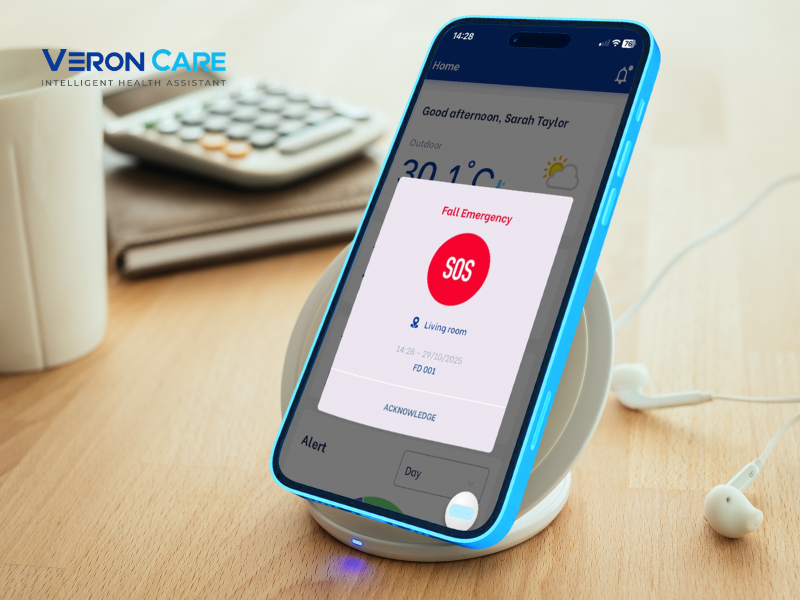
When a fall happens, silent emergency detection triggers instant alerts — no button required.
From Reactive Alarms to Passive Emergency Alerts
Silent emergency detection represents a shift from reaction to awareness. Instead of waiting for a request for help, the system continuously observes daily behavior and identifies when something deviates from normal patterns.
Passive emergency alerts are triggered by risk, not by action. When movement slows unexpectedly, inactivity lasts too long, or routines break without explanation, the system recognizes potential danger and notifies caregivers.
The Rise of No-Button Emergency Systems
No-button emergency systems are designed for real-world conditions. They assume that emergencies may happen when individuals cannot respond, cannot communicate, or do not realize they are in danger.
By removing the requirement to press a button or wear a device, silent emergency detection closes one of the most critical safety gaps in modern care.
Undetected Health Events in Daily Life
Falls Without Calls for Help
Not all falls are sudden or dramatic. Some involve slow loss of balance, sliding to the floor, or sitting down and being unable to stand again. In many cases, no call for help is made.
These falls become undetected health events when there is no witness and no alert. The danger increases with time, especially if the individual remains immobile or disoriented.
Medical Distress Without Visible Symptoms
Medical distress does not always present obvious symptoms. Fatigue, dehydration, infection, or breathing difficulty can develop gradually. Without background risk monitoring, these conditions often go unnoticed until they escalate into emergencies.
Silent emergency detection makes these subtle changes visible before they become critical.
Passive Emergency Alerts as a New Standard
How Background Risk Monitoring Works
Background risk monitoring establishes a behavioral baseline over time. The system learns what normal daily movement, activity, and rest look like for each individual.
When behavior deviates from that baseline, passive emergency alerts are generated. These alerts focus on meaningful change rather than isolated incidents.
Differentiating Normal Behavior From Risk
Not every change is an emergency. Effective systems distinguish between harmless variation and genuine risk. Reduced movement over several days, prolonged inactivity after a bed exit, or repeated nighttime disruptions may signal a developing problem.
This ability to differentiate normal behavior from risk is what makes passive emergency alerts reliable and actionable.
The Invisible Safety Net Concept
Protection Without Surveillance or Burden
An invisible safety net protects without being felt. There are no cameras watching, no devices to wear, and no actions required. Safety exists quietly in the background.
This approach preserves dignity and autonomy while still providing continuous protection.
Why Invisible Systems Improve Adoption
Systems that are visible or intrusive often face resistance. Invisible systems blend into daily life, making them easier to accept and sustain long term.
Higher adoption leads directly to better outcomes, which is why invisible safety nets are critical for effective silent emergency detection.
Background Risk Monitoring and Predictive Insight
Behavioral Baselines and Deviation Detection
Background risk monitoring enables comparison across time. Today can be measured against yesterday, this week against last month. Gradual decline becomes visible through data rather than guesswork.
Behavioral baselines allow systems to detect small but meaningful changes before emergencies occur.
Early Signals Before Emergencies Escalate
Predictive insight allows caregivers to act early. Increasing inactivity, slower movement, or disrupted routines often appear days or weeks before a serious event.
By identifying these early signals, silent emergency detection supports proactive care rather than crisis response.
Privacy-First Design in Silent Emergency Detection
Why Cameras and Wearables Fall Short
Cameras raise privacy concerns, especially in private spaces. Wearables often fail when forgotten, removed, or rejected. Both approaches depend on compliance, which cannot be guaranteed.
These limitations create gaps precisely when protection is needed most.
Passive Monitoring Without Intrusion
Privacy-first systems rely on passive sensing and behavioral analysis rather than visual or audio data. This delivers safety without surveillance.
Respecting privacy is not optional; it is essential for trust, adoption, and long-term effectiveness.
How Veron Care Delivers Silent Emergency Detection
Camera-Free, No-Button Emergency Protection
Veron Care is built around camera-free, no-button emergency systems that operate continuously in the background. Individuals do not need to wear devices or remember to ask for help.
The system monitors movement, presence, and inactivity using advanced sensing technology.
Turning Passive Data Into Actionable Alerts
Veron Care transforms passive data into meaningful alerts through AI-driven analysis. When patterns suggest elevated risk or undetected health events, caregivers are notified promptly.
This creates an invisible safety net that works during sleep, illness, or moments of confusion, without disrupting daily life.
Conclusion: Safety That Works Even When No One Asks for Help
Silent emergency detection is a necessary evolution in modern care. Many serious health events happen quietly, without alarms or calls for help. Systems that rely solely on action will always leave gaps.
By combining background risk monitoring, passive emergency alerts, no-button emergency systems, and privacy-first design, silent emergency detection fills those gaps.
Safety should exist continuously, respectfully, and invisibly.
Ready to create an invisible safety net for the people you care about? Discover how Veron Care’s camera-free, no-button emergency system enables silent emergency detection and proactive protection. Visit Veron Care today.