


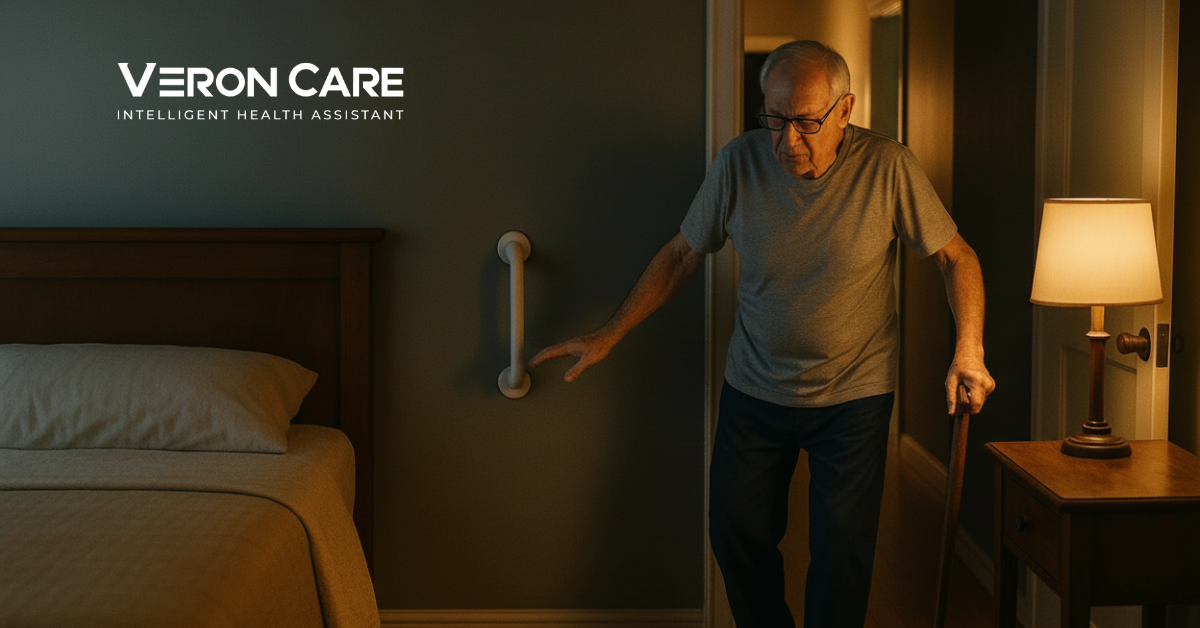
\Nighttime safety for older adults remains one of the most underestimated risks in long-term care. While families and care providers often focus on daytime routines, the hours after dark quietly introduce a higher concentration of danger. Reduced lighting, physical fatigue, medication effects, and disrupted sleep cycles all converge at night, creating conditions where accidents and health events are more likely to occur and less likely to be noticed.
Night fall prevention and protection against sleep-time emergencies require a fundamentally different approach from daytime safety. After dark, older adults are not simply less active; they are more vulnerable. Understanding after-dark health risks and addressing them through nocturnal monitoring and intelligent nighttime alerts is essential for proactive, modern care.
Why Nighttime Is the Most Dangerous Time for Older People
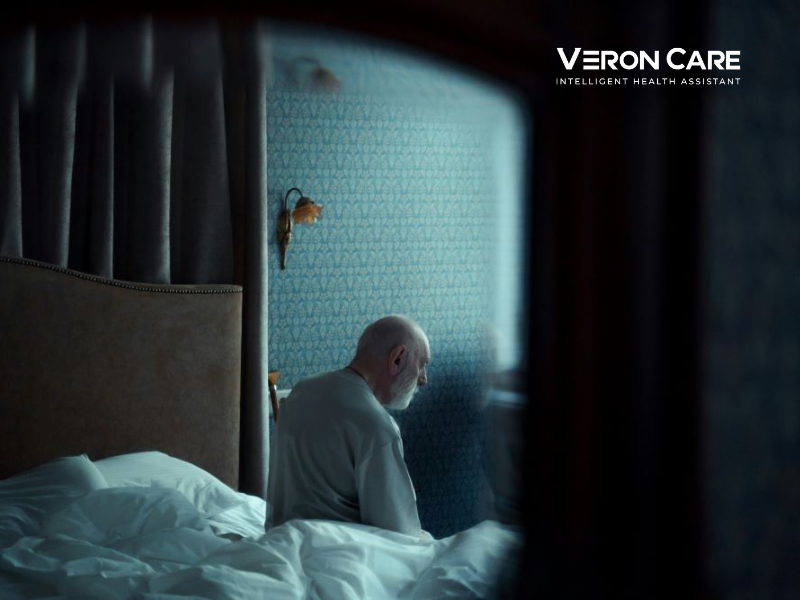
Quiet nighttime moments can hide serious safety risks for older adults.
The Hidden Nature of After-Dark Health Risks
Nighttime presents unique physiological and environmental challenges for older people. Vision declines significantly in low-light conditions, even for individuals without diagnosed eye disease. Muscle strength and balance often decrease after a full day of activity, while reaction times slow due to fatigue.
Medication side effects such as dizziness, low blood pressure, or confusion may also intensify at night. Combined with reduced lighting and quiet environments, these factors make after-dark health risks more difficult to detect and address promptly.
Why Sleep-Time Emergencies Often Go Unnoticed
Sleep-time emergencies are particularly dangerous because they are silent. An older adult who falls and cannot get up, experiences breathing irregularities, or remains immobile for an extended period may not be discovered until morning.
In many cases, the delay in response causes more harm than the initial event itself. Without continuous awareness, these incidents rely on chance discovery rather than timely intervention.
Understanding Nighttime Safety Challenges for Older Adults
Reduced Visibility, Fatigue, and Cognitive Decline
Nighttime safety is not defined by a single risk factor. It is the accumulation of subtle vulnerabilities that emerge after dark. Older adults may experience mild dizziness when standing, slower gait, or hesitation before moving. These changes are often barely noticeable during the day but become pronounced at night.
Fatigue further reduces coordination and balance, while low visibility increases the likelihood of missteps and collisions with furniture or doorways.
How Nocturnal Disorientation Increases Fall Risk
Nocturnal disorientation is another major contributor. Older people with early cognitive decline may struggle to orient themselves when waking in darkness. Familiar environments can feel confusing, increasing anxiety and unsafe movement. Even healthy aging adults may misjudge distances or lose balance when transitioning between bed, bathroom, and hallway.
Addressing these challenges requires more than environmental fixes. It requires visibility into nighttime behavior patterns, which traditional care models often lack.
Night Fall Prevention Starts With Behavior Awareness
Common Movement Patterns Before Nighttime Falls
Effective night fall prevention begins with recognizing that falls rarely occur without warning. In many cases, older adults show changes in nighttime movement days or weeks before a fall.
These patterns may include increased bathroom visits, longer pauses before standing, slower walking speed, or frequent bed exits. Identifying these early signals allows caregivers to intervene before an accident occurs.
Why Bathrooms and Bedrooms Are High-Risk Zones
Bedrooms and bathrooms are consistently identified as high-risk zones for nighttime falls. These spaces require frequent posture changes, balance adjustments, and often quick movement driven by urgency.
Monitoring how older people navigate these areas at night provides valuable insight into emerging risks and helps guide preventive adjustments.
Sleep-Time Emergencies and Silent Health Events
Breathing Irregularities and Prolonged Inactivity
Sleep-time emergencies extend beyond falls. Breathing irregularities, prolonged inactivity, and abnormal sleep disruptions are all after-dark health risks that may signal serious conditions.
Older adults with cardiac or respiratory conditions are especially vulnerable during sleep, when symptoms may worsen without immediate awareness.
Delayed Response and Its Impact on Outcomes
Prolonged inactivity at night is a critical indicator. An older person who leaves bed but does not return within a normal timeframe may have fallen or become disoriented. Similarly, unusually long periods without movement may indicate illness, weakness, or distress.
Without nocturnal monitoring, these events often go unnoticed until morning, significantly increasing health risks.
Nocturnal Monitoring as a Preventive Safety Layer
Continuous Monitoring Without Disrupting Sleep
Nocturnal monitoring introduces a preventive safety layer that traditional care models often lack. Instead of relying on periodic checks or wearable devices, passive monitoring systems observe nighttime behavior continuously and unobtrusively.
This approach provides awareness without disturbing sleep or requiring active participation from the individual.
From Passive Data to Actionable Nighttime Alerts
Effective nocturnal monitoring captures patterns rather than isolated moments. It tracks how often an older adult leaves bed, how long they remain active, and whether nighttime routines change over time.
These insights allow systems to generate actionable nighttime alerts when behavior deviates from normal patterns.
Nighttime Alerts That Protect Without Alarms
Differentiating Normal Night Movement From Risk
Nighttime alerts must be precise to remain effective. Excessive alerts lead to fatigue and reduced trust. Intelligent systems differentiate between normal nighttime movement and behavior that signals elevated risk.
Repeated attempts to stand, extended time in the bathroom, or lack of movement after a bed exit may indicate the need for intervention.
When Caregivers Should Be Notified
Well-designed nighttime alerts notify caregivers only when meaningful deviations occur. This ensures timely support without unnecessary disruption or alarm.
Quiet, targeted notifications protect nighttime safety while preserving rest and dignity.
Privacy-First Technology for After-Dark Monitoring
Why Cameras Create Resistance at Night
Privacy concerns intensify at night, particularly in bedrooms and bathrooms. Camera-based systems often face resistance because they intrude on personal space during the most vulnerable hours.
This discomfort can reduce long-term adoption and undermine safety goals.
The Role of Non-Intrusive, Camera-Free Monitoring
Privacy-first, camera-free monitoring offers a more acceptable alternative. By relying on motion sensing, presence detection, and behavioral analysis rather than visual data, these systems protect older adults without compromising dignity.
Respecting privacy directly supports better safety outcomes.
How Veron Care Redefines Nighttime Safety for Older Adults
Predictive Monitoring for Night Fall Prevention
Veron Care is designed to address after-dark health risks through predictive, camera-free monitoring. Using contactless technology, Veron Care continuously observes nighttime movement, inactivity, and behavioral changes without collecting visual or audio data.
The system identifies early patterns associated with night fall prevention and sleep-time emergencies, enabling proactive intervention.
Protecting Older People While Preserving Sleep and Dignity
By operating quietly in the background, Veron Care enhances safety without disrupting sleep. Older adults maintain independence, caregivers gain confidence, and nighttime becomes safer without becoming invasive.
Conclusion: Making Nighttime Safer Without Being Invasive
Nighttime safety for older adults demands a shift in thinking. Falls and sleep-time emergencies are rarely random. They are often the result of detectable behavioral and physiological changes that emerge after dark.
Nocturnal monitoring and intelligent nighttime alerts make these changes visible. When combined with privacy-first technology, they allow caregivers to protect older people without disrupting routines or compromising dignity.
Night fall prevention is no longer about reacting to emergencies. It is about understanding risk, acting early, and creating safer nights through insight rather than surveillance.
Ready to reduce after-dark health risks for the people you care about? Learn how Veron Care’s camera-free nighttime monitoring helps prevent falls and sleep-time emergencies before they happen. Visit Veron Care today.