


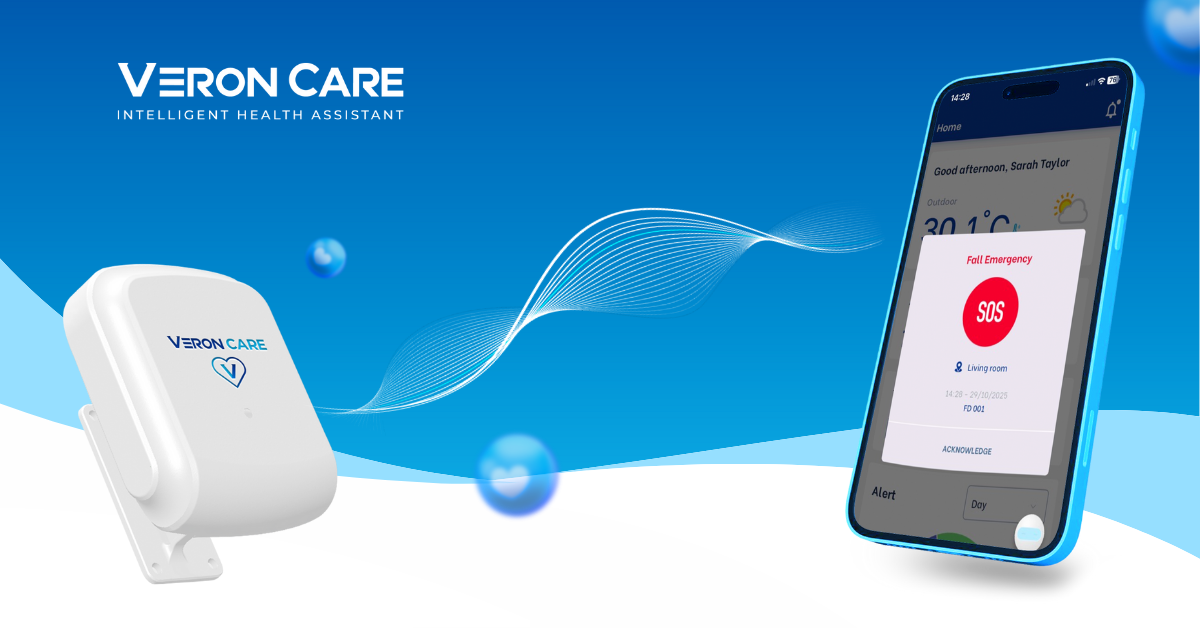
Understanding the Real-Time Alert System
What Is a Real-Time Alert System?
A real-time alert system is a safety solution that detects unusual events: such as falls, inactivity, or sudden health changes and instantly notifies caregivers or family members. Unlike traditional systems that require manual activation, modern AI-powered platforms continuously monitor the environment, identify potential emergencies, and send automatic alerts within seconds.
For elderly care, this technology is a game changer. By combining AI intelligence, sensor fusion, and radar-based detection, it ensures that no critical moment goes unnoticed allowing caregivers to respond before small incidents turn into serious emergencies.
Why Instant Alerts Matter in Senior Care
In senior care, response time can mean the difference between life and loss. Studies show that seniors who receive help within the first few minutes after a fall recover faster and face fewer complications.
Traditional solutions like wearable panic buttons often fail when seniors forget to wear them or are unable to press them in time.
A real-time alert system overcomes these limitations by operating autonomously, without requiring physical interaction. It detects incidents instantly, sends notifications directly to caregivers’ devices, and even shares context like room location or type of alert. The result is faster help, less anxiety, and safer living for seniors.
24/7 Emergency Alert Monitoring: Always On, Always Aware
Continuous Safety Beyond Traditional Alarms
Unlike motion sensors or button-based systems that work only under certain conditions, 24/7 emergency alert monitoring ensures uninterrupted safety coverage.
Powered by AI and radar, it actively tracks movements, detects vital signs, and monitors sleep patterns around the clock without cameras or wearables.
This “always on” approach provides both seniors and families with peace of mind, knowing that help is ready at any hour, day or night.
How Real-Time Alerts Improve Emergency Response Time
The true strength of an AI-based alert system lies in its speed and accuracy. Once an abnormal event like a fall is detected, the system instantly pushes a real-time notification to the caregiver’s dashboard and connected mobile app.
This process reduces manual delays and ensures that caregivers can take action within seconds, not minutes.
In critical moments, such responsiveness can prevent serious injury, prolonged immobility, or secondary health risks.
Radar-Powered Fall Alerts: Smarter, Contactless Safety
How Radar Technology Detects Falls in Real Time
Radar technology enables non-intrusive motion detection by measuring subtle changes in distance and movement patterns within a room.
When a person falls, the radar sensor detects sudden vertical motion and the absence of normal movement afterward. AI algorithms then verify this pattern and trigger an alert.
Unlike cameras, radar systems preserve complete privacy, making them ideal for bedrooms, bathrooms, or care facilities where visual monitoring is inappropriate.
Advantages of Non-Invasive Fall Detection
- Privacy-first: No cameras or microphones required.
- Comfortable: Seniors don’t need to wear or charge devices.
- Accurate: AI filtering minimizes false alarms caused by pets or objects.
- Reliable: Works day and night, even in darkness or through obstacles.

Veron Care’s Real-Time Alerts System instantly detects falls and sends emergency notifications while ensuring privacy and comfort for seniors.
This combination of comfort, safety, and dignity reflects the future of elderly care technology—proactive yet respectful.
Integrating AI Alerts With Mobile Apps
Seamless Connectivity for Caregivers and Families
Veron Care’s AI alert system connects directly to a mobile app, creating a seamless bridge between seniors, caregivers, and family members.
When an emergency occurs, the app instantly displays alert details such as time, location, and status so users can respond right away.
This integration enables remote caregiving, making it easier for families to stay informed and engaged even when they live far apart.
Real-Time Data Sharing and Remote Monitoring
Beyond alerts, caregivers can access real-time activity and health data through the app. Patterns of movement, sleep, or vital signs can be reviewed to assess ongoing health trends.
This remote insight helps caregivers make informed decisions and coordinate care proactively, rather than reacting only when emergencies occur.
Family Emergency Alert Notifications: Peace of Mind at a Glance
Keeping Loved Ones Connected Through Technology
Family members often feel anxious when they can’t be present all the time. With family emergency alert notifications, everyone stays connected to their loved one’s wellbeing.
Each alert is automatically sent to preselected contacts, ensuring that no message is ever missed whether by a professional caregiver, nurse, or family member.
Personalizing Alerts for Different Care Scenarios
Every senior’s needs are unique. AI-powered systems allow families to customize alerts for various situations, such as:
- Falls or prolonged inactivity
- Elevated or irregular heart rate
- Unusual nighttime movements
By tailoring alert types and notification priorities, families and caregivers can focus on what matters most: safety with personalization.
Real-Time Caregiver Alert Dashboard: Command Center for Safety
Centralized Control for Care Teams
In professional care facilities, the real-time caregiver alert dashboard serves as the central hub for monitoring multiple residents simultaneously.
Caregivers can view all alerts in one interface, filter by urgency or location, and coordinate quick responses.
This not only improves operational efficiency but also ensures that no incident goes unnoticed, even during busy shifts.
How AI Prioritizes and Filters Alerts
To prevent “alert fatigue,” Veron Care’s system uses AI algorithms to analyze context and urgency before sending notifications.
For example, a detected fall followed by no movement is treated as high priority, while brief inactivity may be logged but not trigger an alarm.
This intelligent filtering keeps alerts meaningful, allowing caregivers to focus on real emergencies.
The Future of Real-Time Alert Systems in Elderly Care
AI Predictive Alerts and Preventive Safety Models
The next generation of AI alert systems will go beyond detection, they’ll move toward prediction.
By analyzing movement trends, heart rate variability, and sleep data, predictive models can identify risk patterns before incidents happen.
This shift from reactive to preventive care could drastically reduce hospitalization rates and enhance long-term wellbeing for seniors.
Integrating Smart Homes, Hospitals, and Family Networks
Tomorrow’s healthcare ecosystem will be fully connected.
Smart homes, hospitals, and family networks will share real-time data securely, creating a seamless care environment.
AI-driven alert systems like Veron Care will act as the bridge between home safety and clinical care, ensuring that seniors receive continuous protection wherever they are.
Conclusion: Instant Alerts, Infinite Peace of Mind
As the global population ages, real-time alert systems are becoming essential tools for ensuring elderly safety and independence.
Through the power of AI intelligence, radar precision, and human-centered design, Veron Care delivers a new level of reassurance for seniors, caregivers, and families alike.
Take the first step toward safer, smarter elderly living. Visit our page or call +1 904-257-3071 today.