


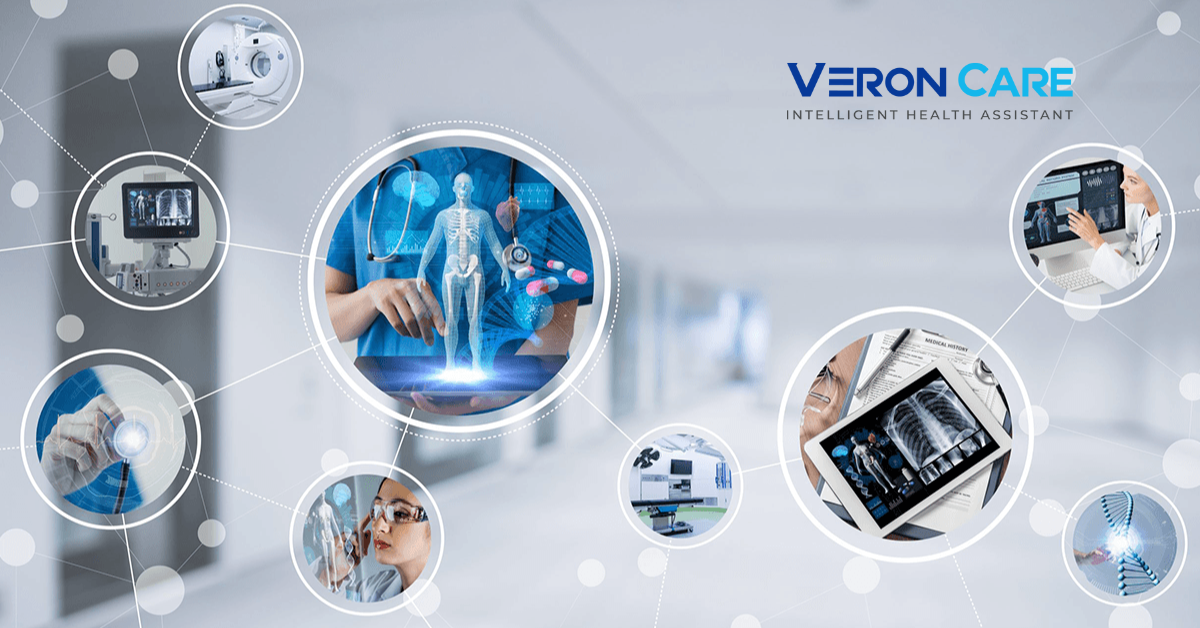
Healthcare is no longer confined to hospitals, clinics, or scheduled checkups. Today, care increasingly happens at home, driven by continuous monitoring, real-time data, and intelligent systems that work quietly in the background. At the center of this transformation is the healthcare IoT platform, a digital foundation that connects devices, data, caregivers, and patients into a single connected medical ecosystem.
As populations age and chronic conditions rise, healthcare IoT platforms are becoming essential infrastructure rather than optional innovation. They enable sensor-to-app monitoring, seamless health data integration, and scalable cloud healthcare systems that support care beyond traditional walls.
Why Healthcare Needs an IoT Platform Today
From Fragmented Devices to a Connected Medical Ecosystem
Historically, healthcare technology evolved in silos. As a result, fall detectors, vital sign monitors, emergency buttons, and electronic health records often operated independently. Consequently, this lack of integration created gaps in understanding and delayed response. To overcome this challenge, a healthcare IoT platform unifies devices into a connected medical ecosystem, where data flows continuously instead of stopping at device boundaries.
In the context of elder care, this fragmentation becomes even more dangerous. When movement data, breathing patterns, and activity trends are separated across tools, caregivers often struggle to recognize risks developing over time. By contrast, a connected medical ecosystem restores that visibility, thereby enabling earlier insight, more informed decisions, and more proactive care.
The Limits of Traditional Monitoring Systems
Traditional monitoring systems are reactive. They alert after an event, not before it. They often depend on wearables, cameras, or manual input, which reduces accuracy and adoption. A healthcare IoT platform replaces these limitations with passive, always-on sensor-to-app monitoring that works without disrupting daily life.
What Is a Healthcare IoT Platform?
IoT platforms enable seamless integration of health data across devices, systems, and care environments.
Defining Cloud Healthcare Systems and IoT Medical Networks
A healthcare IoT platform is a digital infrastructure that connects physical sensors to cloud healthcare systems, where data is processed, analyzed, and delivered to caregivers through applications. This structure forms an IoT medical network that enables continuous monitoring, predictive analytics, and real-time alerts.
Unlike single-purpose devices, healthcare IoT platforms are modular and scalable. New sensors can be added, analytics upgraded, and care models expanded without replacing the entire system.
How Sensor-to-App Monitoring Works
Sensor-to-app monitoring begins with passive sensors installed in the care environment. These sensors capture movement, presence, posture, and physiological signals. The data is transmitted through an IoT medical network to cloud healthcare systems, where algorithms interpret patterns and generate insights. These insights are then delivered through intuitive apps to families, caregivers, or clinical staff.
This end-to-end flow is what transforms raw signals into meaningful care decisions.
Health Data Integration as the Foundation of Modern Care
Turning Disconnected Signals Into Unified Health Intelligence
Health data integration is the backbone of any healthcare IoT platform. Without it, data remains fragmented and underutilized. However, when movement data, activity levels, sleep patterns, and respiratory signals are integrated, they come together to form a holistic view of daily health.
Within a connected medical ecosystem, health data integration enables caregivers to understand trends rather than isolated events. As a result, early intervention becomes possible, and long-term care planning is significantly more informed and effective.
Real-Time Data Flow Across Care Teams
Cloud healthcare systems enable real-time data sharing across care teams. Families, nurses, and clinicians can access the same insights without delays or manual reporting. This shared visibility improves coordination and reduces the risk of missed warning signs.
Inside a Connected Medical Ecosystem
How Devices, Sensors, and Apps Work Together
A connected medical ecosystem relies on interoperability. Sensors collect data, cloud healthcare systems analyze it, and apps deliver insights. The healthcare IoT platform orchestrates this process, ensuring that each component communicates reliably within the IoT medical network.
This ecosystem approach allows care models to evolve. New analytics, dashboards, or alert types can be introduced without changing hardware.
The Role of Cloud Healthcare Systems in Scalability
Cloud healthcare systems provide the scalability required for large-scale deployment. Whether monitoring a single home or hundreds of care units, the healthcare IoT platform adapts without performance loss. Updates, security patches, and algorithm improvements happen centrally, ensuring consistent quality of care.
Sensor-to-App Monitoring in Home and Elder Care
Continuous Monitoring Without Wearables or Cameras
Sensor-to-app monitoring does not have to be intrusive. Modern healthcare IoT platforms use contactless sensing technologies that eliminate the need for wearables or cameras. This improves comfort, privacy, and long-term compliance.
For seniors, this means living naturally while remaining protected. For caregivers, it means reliable data without reliance on user behavior.
Real-Time Patient Insights for Families and Clinicians
Real-time insights are the practical outcome of a healthcare IoT platform. Changes in activity, prolonged inactivity, irregular movement patterns, or breathing anomalies can be detected early and communicated immediately. This allows families and clinicians to act before conditions worsen.
Security, Privacy, and Trust in IoT Medical Networks
Protecting Health Data Across the Cloud
Security is foundational to any healthcare IoT platform. Cloud healthcare systems must protect sensitive health data through encryption, access controls, and compliance with healthcare regulations. A well-designed IoT medical network ensures that data is protected at every stage, from sensor to app.
Designing Privacy-First Monitoring Architecture
Privacy-first design means collecting only what is necessary. Sensor-to-app monitoring focused on behavior and movement avoids visual or audio surveillance, preserving dignity while maintaining safety. Trust is essential for adoption, especially in elder care.
How Veron Care Builds a Smarter Healthcare IoT Platform
Radar-Based Sensing Within an IoT Medical Network
Veron Care’s healthcare IoT platform uses radar-based sensors integrated into a robust IoT medical network. These sensors detect movement, presence, posture, and breathing without capturing images or requiring wearables. Data flows securely into cloud healthcare systems for continuous analysis.
From Sensor Data to Actionable Care Decisions
Health data integration transforms sensor data into actionable insights. Veron Care’s platform delivers clear alerts and trends through intuitive apps, enabling caregivers to respond confidently. This connected medical ecosystem supports proactive care rather than emergency-driven intervention.
The Future of Connected Care Starts at Home
Why Healthcare IoT Platform Enable Proactive Care
Healthcare IoT platforms are shifting care from episodic to continuous. By combining sensor-to-app monitoring, health data integration, cloud healthcare systems, and IoT medical networks, care becomes predictive, scalable, and human-centered. The home becomes a safe, intelligent care environment where risks are identified early and independence is preserved longer.
Discover how Veron Care’s healthcare IoT platform creates a connected medical ecosystem for safer, smarter home care. Learn more at our website.