


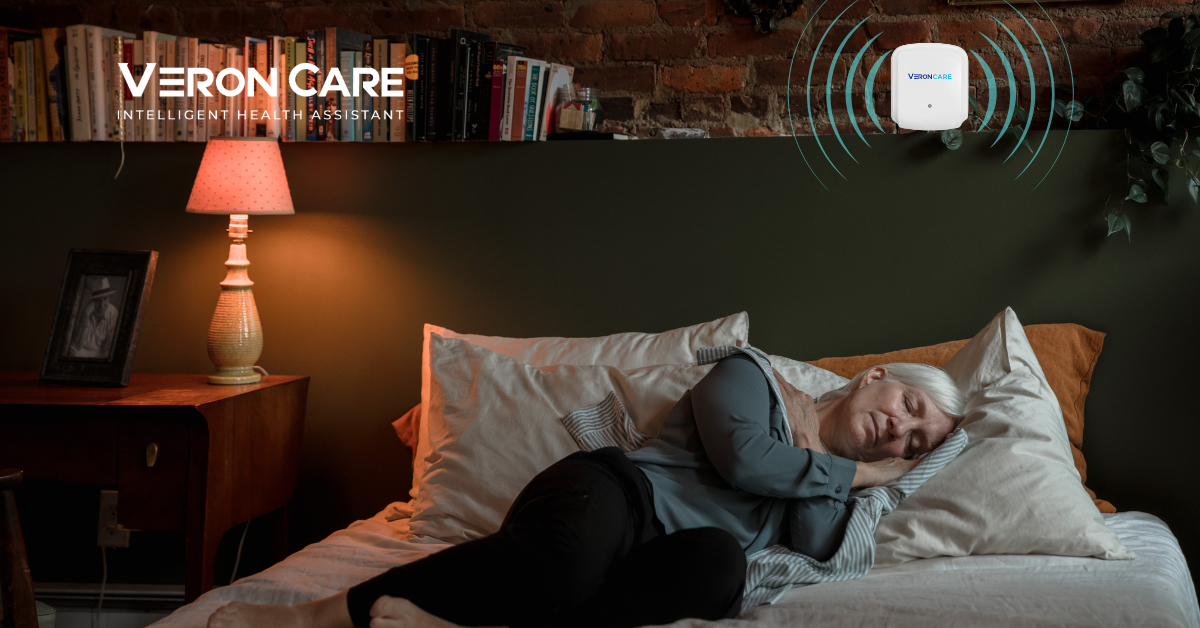
Understanding Contactless Health Monitoring
What Is Contactless Health Monitoring?
Contactless health monitoring uses non-invasive technology: like radar sensors to track vital signs and movement without requiring a person to wear a device or interact with equipment. Instead of physical sensors, radar waves detect micro-movements such as breathing, heart rate, and even subtle shifts in posture.
This technology is emerging as one of the safest, most private, and most reliable ways to monitor seniors at home or in care facilities.
Why Seniors Benefit Most From Contactless Solutions
Seniors frequently forget or refuse to wear devices, remove them while sleeping, or find them uncomfortable. Contactless systems eliminate this burden entirely. Seniors simply live their daily lives while the system quietly works in the background: no charging, no buttons, no behavioral change required.
Radar Technology for Vital Signs: A New Standard of Precision
How Radar Tracks Breathing, Heart Rate, and Movement
Advanced radar emits safe, low-power radio waves that detect micro-motions created by the chest rising and falling or the subtle pulsations from the heart. Because radar senses through clothing, bedding, and even darkness, it provides accurate readings 24/7.
Advantages Over Traditional Vital-Sign Devices
- No skin contact required
- No wires or patches
- Works through blankets and clothing
- Unaffected by lighting conditions
- Continuously monitors without interrupting sleep
This creates a smoother, more dignified monitoring experience for older adults.
How Contactless Tech Improves Safety in Elderly Care
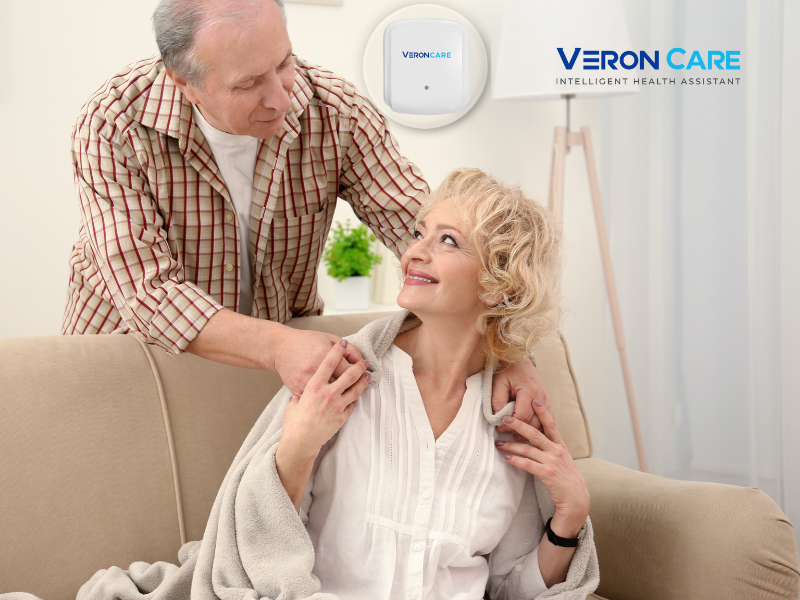
A calm moment made safer with Veron Care’s contactless health monitoring.
Eliminating Human Error and Wearable Limitations
Wearable devices depend on users remembering to charge, wear, and activate them. Radar-based monitoring works independently: offering consistent, objective, and uninterrupted data with zero user effort.
Real-Time Detection for Emergencies and Falls
Falls often occur when seniors are alone and unable to call for help. Radar’s motion analysis and micro-vibration detection can identify sudden changes that indicate a fall or medical emergency, triggering instant alerts to caregivers.
Radar vs. Camera Monitoring: A Privacy-First Comparison
Why Radar Is Safer and More Private Than Video Monitoring
Cameras raise major privacy concerns, especially in bedrooms and bathrooms. Radar creates a safety layer without capturing images, faces, or identifiable visuals. It detects movement and vital signs through signal reflections, not video.
Accuracy and Reliability: Radar vs Camera-Based AI
- Radar does not require light; cameras fail in darkness.
- Radar detects micro-movements, including breathing and heart rate; cameras cannot.
- Radar is unaffected by shadows or angles; camera performance varies with placement.
For elder care, radar offers both higher accuracy and greater dignity.
Benefits of Contactless Monitoring in Healthcare
Proactive Disease Detection and Early Intervention
Continuous vital-sign trends can reveal early changes in respiratory rate, sleep patterns, or heart stability often before symptoms become visible. This supports early intervention and reduces hospitalization risks.
Enhanced Comfort and Dignity for Seniors
Contactless systems allow seniors to experience safety without feeling watched or restricted. They maintain independence while gaining continuous protection.
Continuous Monitoring Without Wearables: A Game Changer
24/7 Passive Monitoring for Consistent Data
Radar ensures no gaps in health tracking. Whether someone is resting, sleeping, or moving around, the system quietly records vital trends.
Reducing Caregiver Stress With Automated Alerts
Family caregivers and nursing staff receive real-time notifications when data indicates a risk such as irregular heart rate, abnormal breathing, or falls reducing guesswork and monitoring fatigue.
The Future of Contactless Health Monitoring
Integrating AI, Radar, and Predictive Analytics
Radar data combined with advanced AI can predict health risks before they happen such as fall likelihood, breathing irregularities, or developing conditions.
Smart Home and Hospital Applications for the Next Decade
Contactless monitoring will integrate with smart-home platforms, eldercare facilities, home health agencies, and hospital systems offering consistent safety across all environments.
Conclusion: Safe, Private, and Always On
Radar-powered contactless monitoring is reshaping elder care by providing continuous safety, unmatched privacy, reliable health insights and all without requiring seniors to change their daily habits.
Stay updated on the latest in elder safety and smart health monitoring – like and follow Veron Care for more innovations real stories from families and caregivers.